Kerala Woman Leads Movement to Conserve India's Indigenous Rice Varieties
Usha Soolapani, an agriculture officer in Palakkad, Kerala, began a significant journey in the early 1980s after reading the Japanese book, "The One-Straw Revolution." This book, which challenged chemical farming, became a guiding light for her, shaping her life's work by encouraging farming without chemicals and a broader view of agriculture beyond mere production.
For years, Soolapani observed the decline of Kerala's paddy ecosystem, marked by rising cultivation costs, stagnant grain prices, and the conversion of wetlands into real estate. Her work against chemical pesticides, particularly Endosulfan, underscored the deep connection between farming, public health, and the environment. She noted this same story echoed across India’s rice heartlands, prompting her to act to save traditional rice varieties.
Between 2005 and 2018, Soolapani and her colleagues at Thanal initiated the "Save Our Rice Campaign." They traveled through Tamil Nadu, Karnataka, West Bengal, and Chhattisgarh, seeking farmers who still protected ancestral rice seeds. These seeds were often preserved in clay pots or kitchen rafters, and elders at seed festivals shared stories of nearly lost varieties, highlighting their cultural and ecological significance.
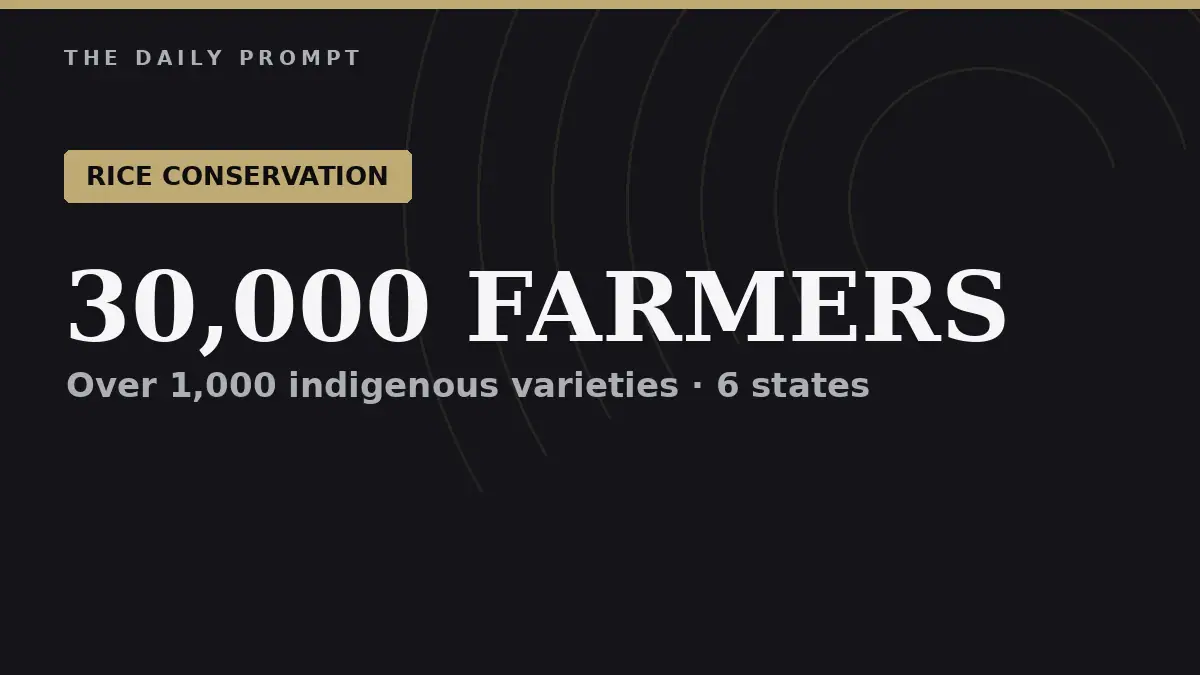
The campaign established Rice Diversity Blocks and community seed banks, providing spaces for people to grow, multiply, and share traditional varieties rather than just store them. Today, this movement has grown substantially, with more than 30,000 farmers across six states—Karnataka, Kerala, Tamil Nadu, Chhattisgarh, Jharkhand, and West Bengal—conserving over 1,000 indigenous rice varieties.
Usha Soolapani emphasizes that rice diversity is crucial for climate resilience, nutrition, and farmers' rights, as traditional varieties are adapted to local landscapes and conditions. She hopes governments will value rice diversity alongside productivity and that young people will recognize paddy ecosystems as sources of meaningful livelihoods.
Why it matters: Conserving indigenous rice varieties is vital for food security and climate resilience.
Editor's note: The report effectively summarizes the source material, providing context on the campaign's history and its current impact.
AI-generated and fact-checked against the original report; claims the gate cannot verify are held back.