Young People Increasingly Recruited as 'Money Mules' by Organized Crime Groups
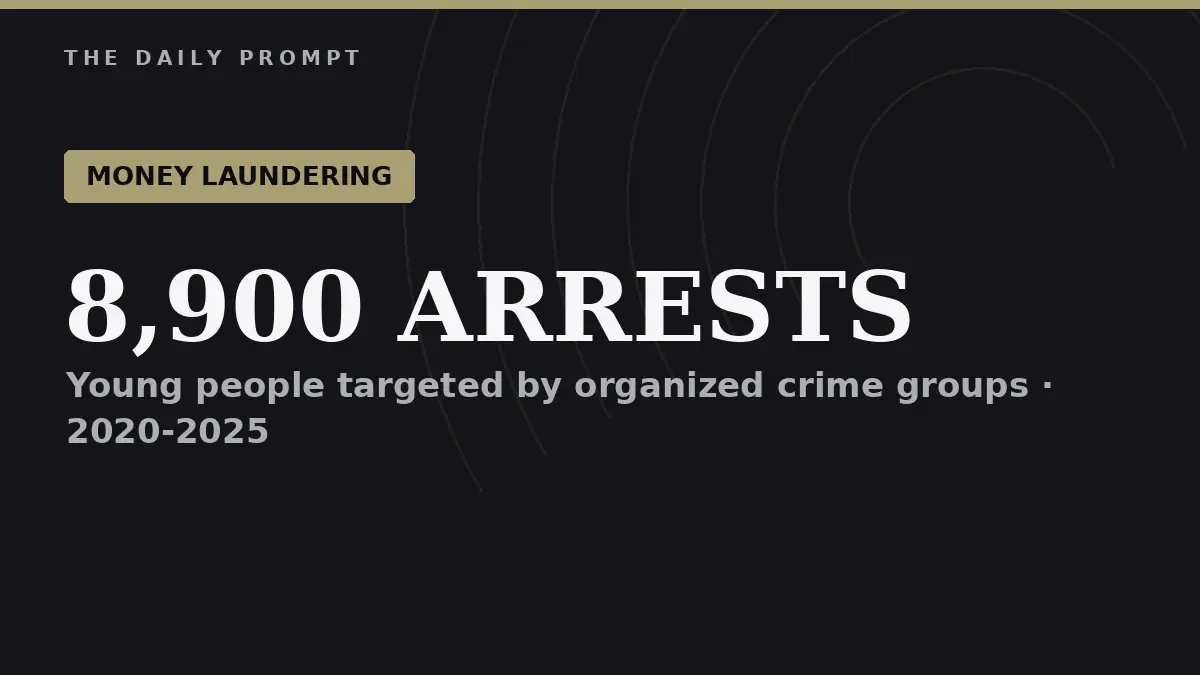
Over 8,900 individuals under the age of 30 were arrested for money laundering offenses in England and Wales between 2020 and 2025. This figure represents more than six in ten of all money laundering arrests recorded during that period. New analysis reveals a growing issue of organized crime groups actively recruiting young people as "money mules" – individuals who move or receive criminal funds on behalf of others.
The UK government's 2025 national risk assessment has identified schools and universities as emerging risk areas for money mule networks. Police officers interviewed for the report indicated that young people are often targeted due to financial pressures, limited experience in managing money, or a lack of awareness regarding the risks of involvement in money laundering. International students were considered particularly vulnerable, with officers reporting that some are targeted shortly after arriving in the UK.
Money mules may be instructed to receive funds into their bank accounts and then transfer them elsewhere, sometimes in exchange for payment. They may be unaware of the illicit origin of the money or that their actions constitute a criminal offense. Analysis of data obtained from 36 police forces through freedom of information requests showed 14,493 money laundering arrests between January 2020 and January 2025. Of these, 8,956 involved individuals aged 18 to 29, and an additional 776 under-18s were recorded by 35 forces.
Students' vulnerability to acting as money mules stems from financial pressures, engagement with social media, and insufficient awareness of legal consequences. Organized crime groups exploit these factors by using fake job advertisements and online recruitment tactics that promise easy income for using personal bank accounts. International students are especially susceptible due to their need for UK bank accounts and cross-border financial activity, making them unwitting participants in laundering proceeds from fraud and organized crime. One police officer noted that international students are "inundated with messages about money laundering" upon arrival.
Differences were observed between police forces, with money laundering arrests concentrated in some of the UK's largest urban areas. This may reflect variations in the scale of organized crime, financial activity, police resources, or how offenses are recorded. The report suggests the criminal justice system is better equipped to handle straightforward money laundering cases than the more complex networks behind them, potentially obscuring those directing operations by focusing on the mules.
Young people involved as money mules may be at the lowest level of larger criminal enterprises. Some may participate knowingly, while others are manipulated, exploited, or convinced their actions are harmless. Universities can also be exposed to money laundering through fee payments or donations, unknowingly facilitating student money laundering. Notably, universities are not currently covered by the UK's money laundering regulations 2017 in the same way as regulated sectors like banks or lawyers, meaning they lack similar obligations to identify and report suspected money laundering.
Previous research indicated universities' susceptibility due to large financial flows and cash payments for tuition and accommodation, finding over 20% of universities offered no anti-money laundering guidance to students. Interviews with regional organized crime units and the City of London Police revealed uncertainty regarding how regulations apply to higher education. Police interviewees also cited staff shortages, lack of specialist expertise, and investigative resources, noting economic crime could become a "forgotten area" amidst competing priorities. Cooperation between police forces and universities varied, with local contacts often preferred over a consistent national approach, which is problematic for criminal networks operating across force boundaries.
What to watch: Efforts to educate young people and strengthen institutional defenses against financial crime.
Editor's note: The article provides a comprehensive summary of the research findings and the challenges identified in the full text.
AI-generated and fact-checked against the original report; claims the gate cannot verify are held back.