US Federal Reserve Holds Key Rate at 3.75%-4% Despite Elevated Inflation
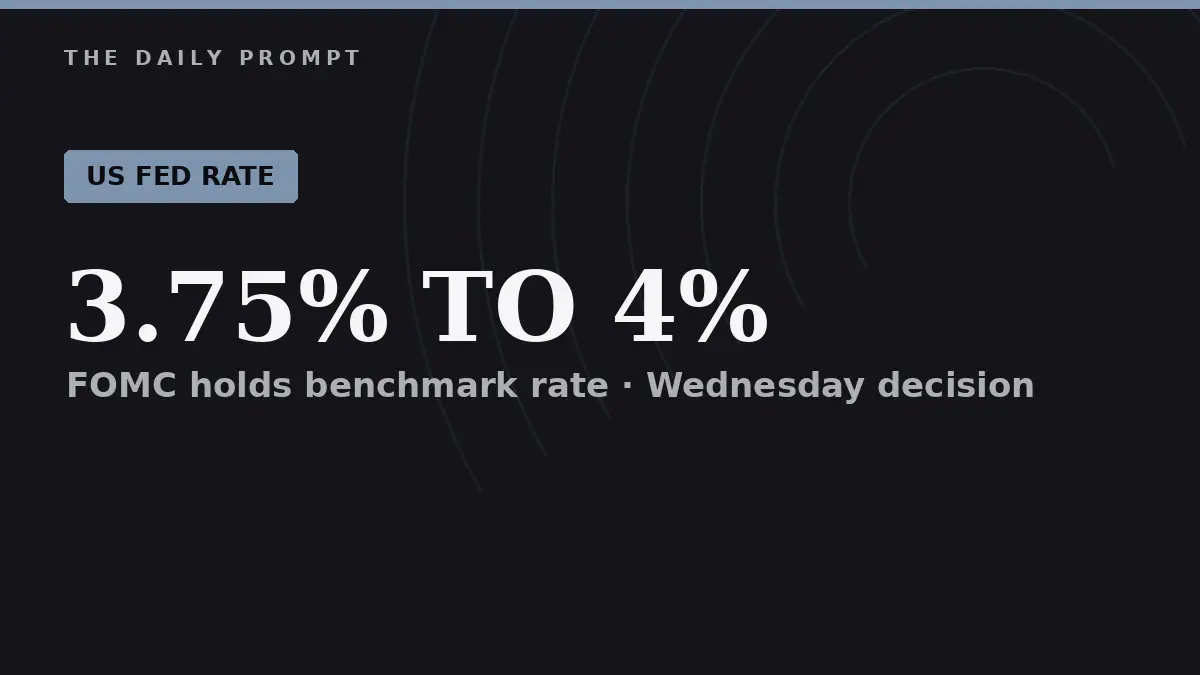
The US Federal Reserve maintained its key interest rate unchanged on Wednesday, holding its benchmark rate in a target range of 3.75% to 4%. The decision, made by the Federal Open Market Committee (FOMC) with a 10-2 vote, comes despite persistent elevated inflation and offers little guidance on the central bank's next monetary policy move. This follows a rate increase in September, which was the first in three years, as policymakers aim to control price rises without stifling economic growth.
In its policy statement, the Fed acknowledged that "Inflation remains elevated," indicating a need for more information to determine the appropriate course of action. Fed Chair Kevin Warsh reiterated concerns about inflation, stating to reporters after the meeting that "Inflation is too high," and pointing to higher living costs, including rising fuel prices, faced by households. While noting that economic activity was expanding at a "strong" pace, the central bank provided minimal hints regarding future rate adjustments. Governor Lisa Cook and Cleveland Fed President Beth Hammack dissented from the decision, both advocating for an immediate increase of 0.25 percentage points.
The Fed has consistently struggled to bring inflation back to its long-term target of 2%. US consumer inflation reached 3.7% in September, nearing a three-year high recorded in May. Contributing factors to these price pressures include higher energy costs, import tariffs, and increased demand in certain economic sectors due to investment in artificial intelligence infrastructure.
The implications of the Fed's decisions extend beyond the United States, influencing global borrowing costs, currency movements, investment flows, and international trade. Countries with significant dollar-denominated debt are particularly sensitive to shifts in US monetary policy. Other major economies are also confronting inflationary pressures; for example, Canada raised its key interest rate to 2.5% on Wednesday, marking its first increase since July 2023. The Federal Reserve must balance its dual mandate of controlling inflation and supporting maximum employment. While higher rates can curb price rises by making borrowing more expensive, they also carry the risk of weakening spending and investment. The central bank has also faced external pressure, with President Donald Trump repeatedly advocating for lower borrowing costs.
What to watch: Future inflation data and any shifts in the Fed's forward guidance.
Editor's note: The draft accurately reports the Fed's decision, the dissenters, and the broader economic context mentioned in the source.
AI-generated and fact-checked against the original report; claims the gate cannot verify are held back.