Engineer's Sunday Clean-Ups Catalyze Community Action, Clear 1.2 Lakh Kg River Waste
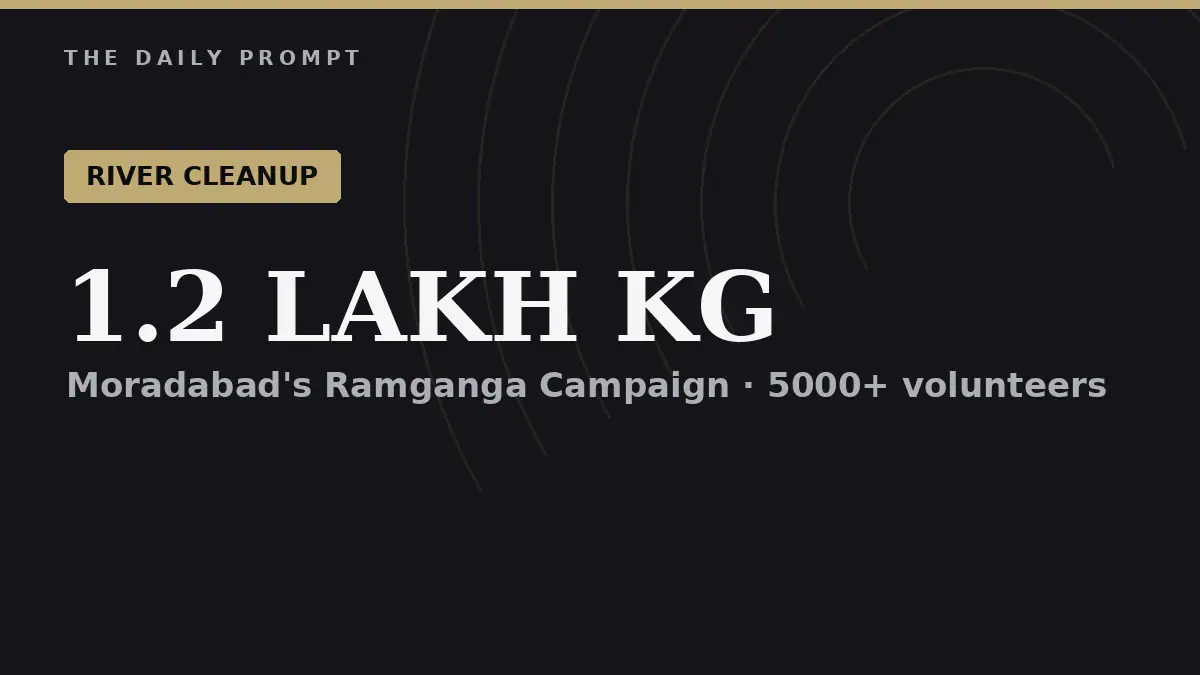
Kapil Kumar, 35, leads the Clean Up Ram Ganga Campaign in Moradabad, an initiative that has seen over 5,000 volunteers participate in more than 218 clean-up drives, collectively removing over 1.2 lakh kg of waste. This sustained effort by Kapil's team at Parivartan “The Change” has fostered a significant shift in local attitudes, as observed by 40-year-old Chotu, a local fritters stall owner near Lalbagh. Chotu notes that while people once merely watched volunteers, they now feel responsible for keeping the ghat and river clean.
Kapil's journey began after completing his B.Tech in mechanical engineering in 2013 and a PGDM from 2014-2016, during which he prepared for government examinations. He and his friends founded Parivartan in October 2016, registering it in July 2017. A pivotal moment came from a teacher's challenge in a Moradabad government school, prompting Kapil to act beyond criticism by helping a child receive medical treatment. Early initiatives of Parivartan included riverbank awareness, air pollution, and women's empowerment through street plays, driven by a broad desire to address social issues.
The Clean Up Ram Ganga Campaign formally launched on Earth Day, 22 April 2018, following Kapil's observation of significant waste in the Ramganga in November 2016. Initial efforts included three months of Sunday clean-ups, a wall mural, and an 11,000-signature cycle yatra from Moradabad to Varanasi. However, Kapil realized this approach was not sustainable, stating, “What we were doing earlier wasn't sustainable. We would clean the ghat for three months, but once we stopped, it would eventually return to the same condition.” This led to a re-evaluation of strategy and a commitment to continuous engagement.
On World Environment Day, 5 June 2021, the team began a new, unwavering phase at Lalbagh Ghat, committing to long-term Sunday clean-ups and awareness activities. Volunteers, including students, professionals, and NCC/NSS members, work from early morning, focusing on segregating plastic and non-biodegradable waste for municipal disposal, while organic offerings are composted. These efforts are complemented by conversations with visitors, driving behavioral change. Mansi Mehrotra, 25, a long-time volunteer, emphasizes the patience required for such change, while Vikrant, 38, a waste collection driver, attests to the “clearly visible” impact. Funds are generated through the SEHYOG initiative, collecting recyclables, and individual donations. Parivartan has received India Book of Records recognition and advocates for systemic changes like efficient sewage treatment plants, with Kapil stating, “Cleaning the Ganga is not possible without cleaning the Ram Ganga.” He believes the greatest achievement is the change in people's behavior, a sentiment echoed by Chotu, who keeps cleaning tools ready for the next Sunday.
Why it matters: Community-led initiatives can transform local environments and foster lasting behavioral change.
Editor's note: Comprehensive summary of the extensive source material covering Kapil Kumar's campaign and background.
AI-generated and fact-checked against the original report; claims the gate cannot verify are held back.