US Loses Measles Elimination Status Amid Record Cases and Deaths
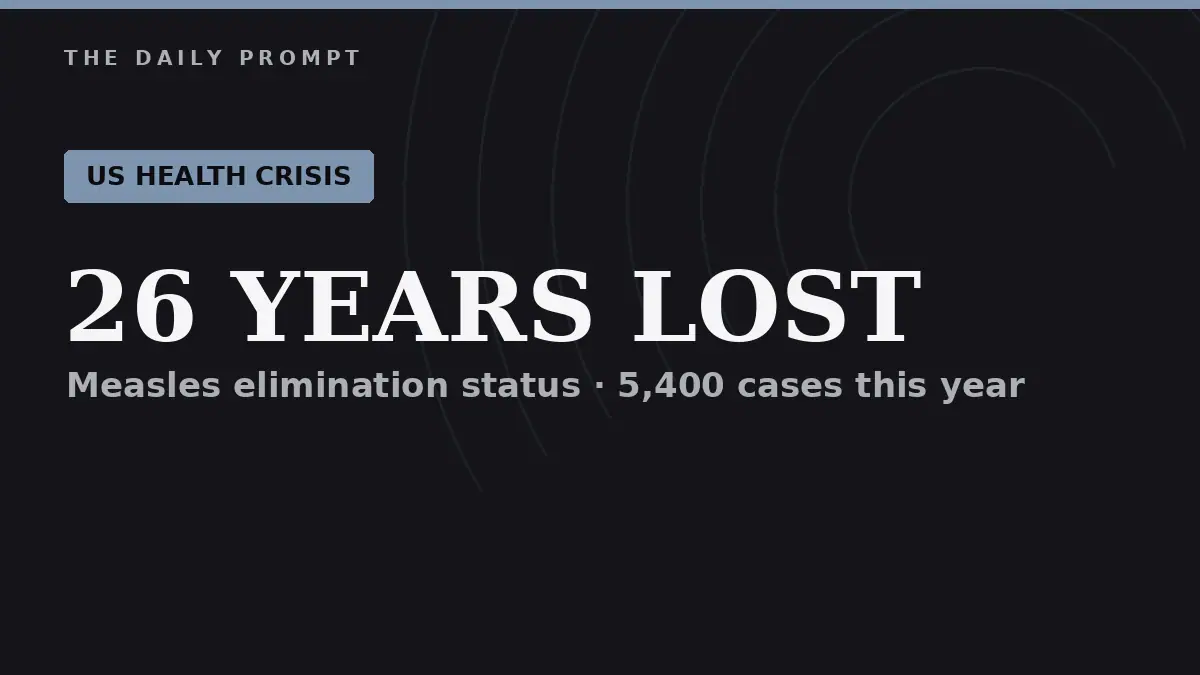
The US has lost its measles elimination status after 26 years, following two years of record case numbers and deaths, as reported on November 17, 2026. This decision by the Pan American Health Organization (PAHO), a specialized United Nations service, came after determining uninterrupted transmission of the same measles strain for over 12 months. States have reported 10 measles-related deaths this year, the highest number since the 1990s, alongside 5,400 cases, the most recorded in a year since 1991. PAHO director Dr Jarbas Barbosa announced that Mexico and Bolivia also lost their elimination status, attributing the regional resurgence to "gaps in vaccination" and calling the figures "a serious warning." Canada, which lost its status last year, has made strides to interrupt transmission, while the UK, Spain, Austria, Russia, Azerbaijan, and Uzbekistan also lost their measles-free status earlier this year. Nuwan Gunawardhana, an assistant professor of medicine with Columbia University Irving Medical Center, described the US losing its elimination status as "a huge leap backwards." The US Department of Health and Human Services (HHS) did not respond to the BBC's request for comment.
The highly contagious measles virus, known for its blotchy red rash, previously infected millions annually before a vaccine was developed. The US recommends two measles, mumps, and rubella (MMR) shots for children aged one to six, which are 97% effective. Historically, the US was the first country in the Americas to eliminate measles due to effective vaccination campaigns, a fact noted by William Moss, a pediatric infectious disease specialist at Johns Hopkins Bloomberg School of Public Health. However, trust in public health systems has been eroding since the Covid-19 pandemic, exacerbated by misinformation about vaccine safety, according to Dr Gunawardhana. The national MMR vaccination rate has fallen to 92.4%, below the 95% threshold required for herd immunity, which is crucial for limiting spread and protecting vulnerable populations like newborns.
The decline in vaccination rates and the resurgence of measles have been significantly influenced by political actions and statements, doctors and public health officials contend. US Health Secretary Robert F Kennedy Jr, a vaccine skeptic, has frequently cast doubt on the safety of the MMR shot and has attempted to implement sweeping changes to US vaccine recommendations and policies. Kennedy fired all members of a top vaccine advisory panel last year, replacing them with his own appointees, some of whom were vaccine critics. This panel recommended several vaccine changes, including no longer requiring the Hepatitis B vaccine for all newborns, but these recommendations were blocked by a federal judge. Kennedy has argued that the rise in measles cases began before his tenure at HHS and that neighboring countries also saw increased infections. Furthermore, President Donald Trump this year also questioned the MMR vaccine's safety, issuing an executive order to split the shot into three separate immunizations for measles, mumps, and rubella—a move public health experts warn would be costly and could sow confusion about an already safe vaccine. Dr Gunawardhana emphasized the impact of these mixed messages, stating, "It's confusing patients. It's confusing families. We need a clear message from the top." The federal government's vaccine maneuvers have largely left public health officials and states to formulate their own recommendations, upholding established practices. An outbreak in Pennsylvania, for instance, has infected over 1,400 people and killed seven, according to state officials, though the US Centers for Disease Control and Prevention (CDC) is currently declining to record some of these deaths in its database amidst disagreement with Kennedy over counting methods.
What to watch: Ongoing efforts to restore vaccination rates and address vaccine misinformation.
Editor's note: The article is comprehensive, well-structured, and incorporates all provided facts and context from the full text without invention.
AI-generated and fact-checked against the original report; claims the gate cannot verify are held back.