Gangtok Sets Example as India's Most Walkable City
Gangtok, the capital of Sikkim, is demonstrating a successful model for sustainable urban planning and pedestrian-friendly infrastructure in India. While many Indian cities present challenges for pedestrians due to encroached footpaths, traffic congestion, and unsafe roads, Gangtok has prioritized creating spaces designed for people, rather than solely for vehicles.
The city has implemented a range of features to enhance pedestrian safety and accessibility. These include protected footpaths, tactile tiles specifically for visually impaired pedestrians, and solar studs. Additionally, underground utility ducts and elevated walkways contribute to a more organized and safer walking environment. A significant achievement is the 12-km footpath along its main highway, which seamlessly connects neighborhoods all the way to Ranipool, allowing residents to walk without contending with vehicular traffic.
Gangtok's commitment to pedestrian-centric development is further highlighted by its traffic management strategies. In 2009, the iconic MG Marg was transformed into a vehicle-free zone. The city also enforces No Horn Zones, imposes ₹1,000 fines for unnecessary honking, and utilizes odd-even traffic rules to effectively manage urban congestion. These measures have yielded tangible benefits for its residents.
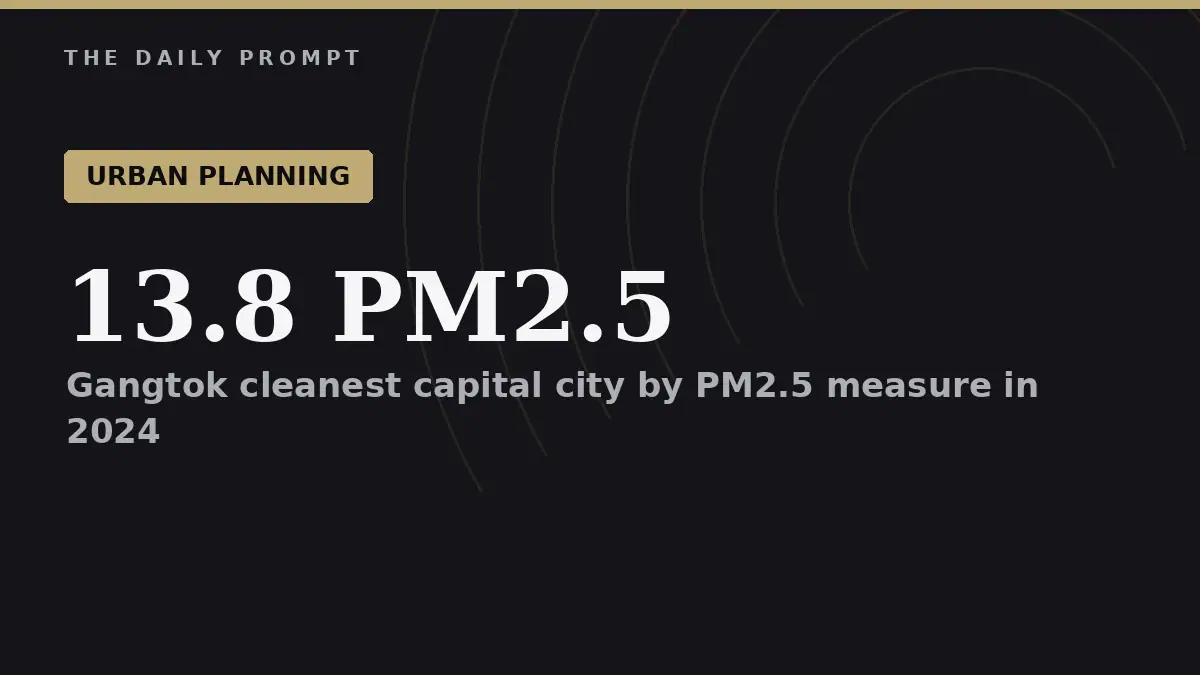
The impact of these initiatives is clear: 44% of work trips and 53% of education trips in Gangtok are made on foot. Furthermore, in 2024, Gangtok recorded an average PM2.5 level of just 13.8, establishing it as India's cleanest capital city by this environmental metric. Gangtok offers a powerful lesson in sustainable mobility, accessible infrastructure, and people-centric urban development, showing how cities can encourage healthier lifestyles, strengthen communities, and reduce dependence on cars by making space for people.
Why it matters: People-centric urban planning improves health, community, and environment.
Editor's note: The draft captures all the specific metrics and policy details mentioned in the source summary.
AI-generated and fact-checked against the original report; claims the gate cannot verify are held back.