US Tech Stocks Decline, Asian Markets Rebound Amid Tariff Concerns
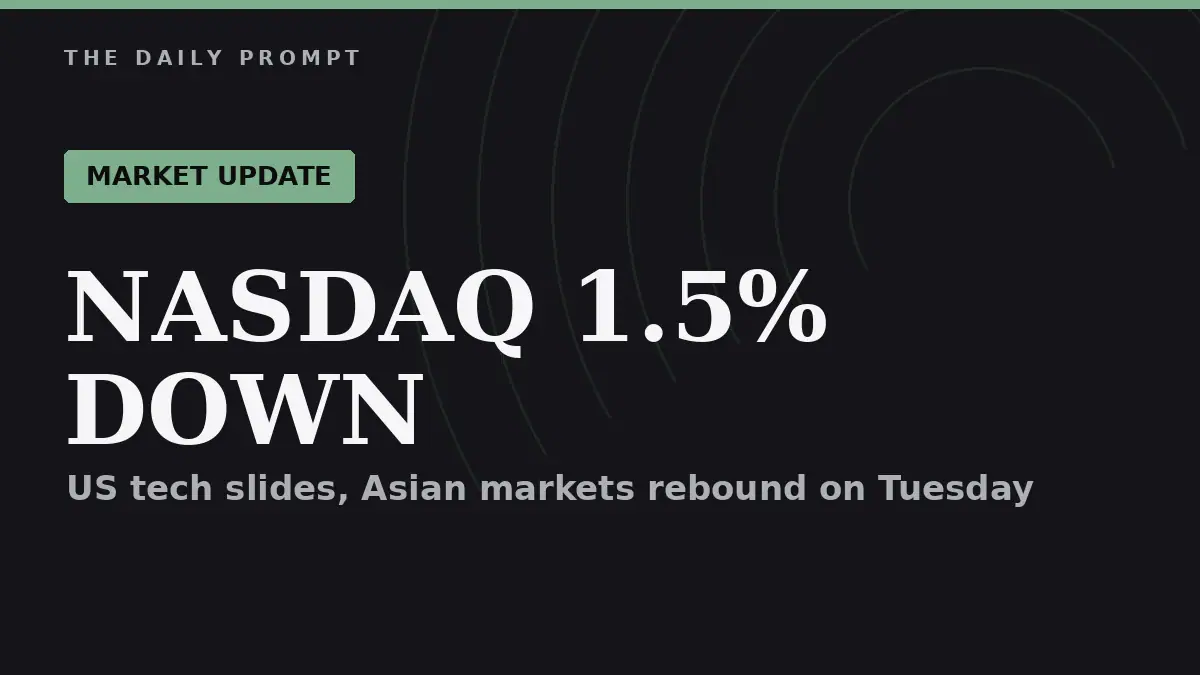
US stock markets experienced a selloff in technology giants on Tuesday, halting a recent rebound, with concerns over fresh US tariffs contributing to the decline. The Nasdaq 100 fell 1.5 percent, while the broader S&P 500 lost 1.3 percent. This indicates a challenging day for many US-focused investment portfolios.
Semiconductor giant Nvidia saw its shares slide 4.7 percent, following its biggest advance since 2003. This dip fueled skepticism about the sustained recovery of the artificial intelligence (AI) trade. Additionally, fears surrounding AI safety emerged after Axios reported that employees at Anthropic PBC and OpenAI believe some unreleased models are becoming excessively powerful, potentially influencing investor sentiment in the tech sector.
In contrast, Asian shares rallied, with MSCI’s Asia Pacific equities index climbing 1.5 percent. This rebound occurred after eight consecutive sessions of losses that had pushed the index close to a bear market. The gains were notably led by South Korea, a key beneficiary of the AI rollout this year, where its Kospi Index surged 6.3 percent. Japanese shares also rose over 3 percent as trading resumed after a long weekend, offering a brighter outlook for Asian-focused funds.
Separately, oil prices rose on Tuesday amidst continued risks to shipping through the Strait of Hormuz. Brent crude futures increased by $1.05, or 1.2 percent, to $90.42 a barrel at 1423 GMT, after hitting their lowest since August 27 earlier in the session. US West Texas Intermediate crude futures were up $1.01, or 1.26 percent, at $81.18 a barrel, having fallen to their weakest since August 10. The United Kingdom Maritime Trade Operations reported three vessels were struck by unidentified projectiles on Monday while sailing east through the Strait of Hormuz, highlighting geopolitical impacts on energy costs.
What to watch: Investors will monitor ongoing developments in AI technology, global trade policies, and geopolitical events in energy shipping lanes, as these factors continue to influence market movements.
Editor's note: The draft effectively synthesizes the market data and geopolitical context provided in the source text.
AI-generated and fact-checked against the original report; claims the gate cannot verify are held back.